
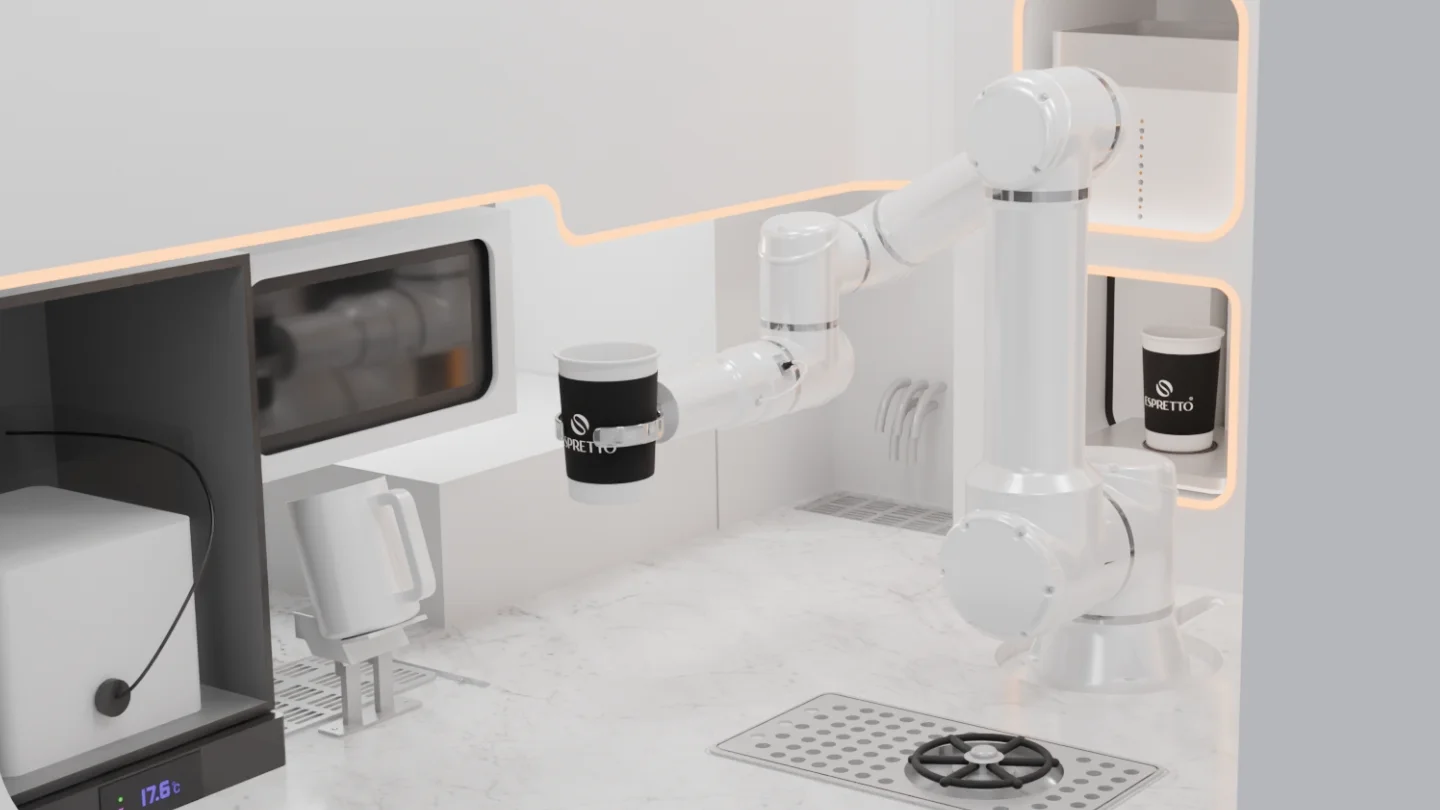
For decades, the received wisdom in specialty coffee was simple: great espresso takes time, skill, and a human touch. That orthodoxy is being dismantled — one precisely calibrated extraction at a time.
The science of espresso is, at its core, a science of controlled variables. Pressure, temperature, grind size, dose, and extraction time must all align within narrow tolerances to produce a shot that is balanced, complex, and repeatable. The Specialty Coffee Association defines the ideal extraction window as 25 to 30 seconds, at a brewing pressure of 8 to 9 bars, and a water temperature between 90 and 96 degrees Celsius. A deviation of just one or two degrees Celsius, according to the Barista Guild, can shift the flavour profile from bright and nuanced to flat or bitter.
"Pressure is the single most defining element that separates espresso from every other brewing method. Because everything happens so quickly, espresso magnifies both precision and error. Where a pour-over might forgive small inconsistencies, espresso exposes them immediately."
— Achilles Coffee Roasters
This is precisely where human baristas, however skilled, face a structural limitation. Every shot pulled by a human hand introduces micro-variations: in tamping pressure, in grind distribution, in the timing of the pour. On a busy morning service, with a queue stretching to the door, those variations compound. The tenth shot of the hour is rarely identical to the first.
The Machine Advantage
Robotic brewing systems eliminate this variability by design. A calibrated robotic arm applies the same tamping force — measured in kilograms, not intuition — on every single dose. Temperature is held to within 0.1 degrees Celsius. Extraction time is measured in milliseconds. The result is not merely a fast cup; it is a consistent cup, produced at a standard that most human baristas can achieve only on their best days.
The global market for automated espresso machines was estimated at $800 million in 2025, according to a Specialty Coffee Association market report — a figure that reflects not just cost-cutting by operators, but a genuine shift in what consumers and industry professionals believe automation can deliver. Xbot, a Chinese robotic barista company that began operations in late 2022, had deployed over 1,000 robots and served more than four million cups by early 2026, with demand accelerating sharply in 2024 as labour costs rose and skilled barista shortages deepened.
"In the coming years, super-automatic coffee machines will continue to improve in terms of quality, variety, and efficiency. New brewing and milk systems will make it easier to offer both dairy and plant-based drinks, as well as hot and cold beverages, without increasing the machine footprint."
— Sanela Lazic, Perfect Daily Grind, 2025
Precision at Scale
The engineering challenge is not simply replicating a barista's movements — it is improving upon them. Modern robotic coffee systems use closed-loop feedback to monitor extraction in real time, adjusting flow rate and pressure profiling mid-shot if the resistance from the coffee puck deviates from the target curve. This is something no human barista can do: the adjustment happens faster than conscious thought.
Water quality is another variable that robotic systems manage with a consistency that is difficult to achieve manually. The Specialty Coffee Association recommends a total dissolved solids (TDS) level of between 150 and 250 parts per million for optimal espresso extraction. Automated systems can monitor and adjust water mineralisation continuously, whereas in a traditional café, water quality is often checked weekly at best.
At Espretto, the 58-second figure is not a marketing claim — it is an engineering specification. From order to cup, the system completes grinding, dosing, tamping, extraction, and milk preparation within a window that most café queues would consider impossibly fast. But speed, in this context, is a byproduct of precision, not a compromise of it. When every variable is controlled, there is no wasted time in correction.
The question the industry is now grappling with is not whether machines can make good espresso. They can, and increasingly, they make it better than the median barista on a median shift. The question is what the human role in coffee becomes when the craft of extraction is no longer the differentiator. The answer, perhaps, is that it becomes what it always should have been: curation, sourcing, and the design of the experience around the cup.