Walk into almost any specialty coffee shop in London and you will find the words "direct trade" printed somewhere — on a chalkboard, a menu, a bag of beans. It has become the industry's most powerful marketing claim. It is also, in most cases, largely meaningless.
"Direct trade is not a clearly defined and protected term, so anyone can use it in their marketing claims."
— Martin Elwert, CEO and founder of Coffee Circle
Unlike Fairtrade, which is a certified standard with auditable criteria, "direct trade" carries no legal definition, no third-party verification, and no minimum price floor. A roaster can claim direct trade relationships based on a single visit to a farm, a conversation with an exporter, or simply the purchase of beans that have passed through fewer than the usual number of intermediaries. The term has been stretched so far that it has become almost impossible for consumers to know what they are actually paying for.
The Numbers Behind the Cup
The structural reality of the global coffee supply chain is stark. Producers receive approximately 10% of the total retail price of coffee — roughly 40 US cents for every $4 cup sold in a London café. The remaining 90% is distributed across exporters, importers, roasters, and retailers. This is not a new problem, but it is one that the specialty coffee industry has been slow to address in any systematic way.
Smallholder farmers produce 60% of the world's coffee, according to Fairtrade International, yet nearly half of those farmers live in poverty, and a quarter in extreme poverty. A major FAO report published in December 2024 identified a persistent "living income gap" — the difference between what coffee farmers earn and what they need for a decent standard of living — as particularly severe in Ethiopia, one of the world's most important coffee origins.
"The situation coffee farmers are enduring globally due to financial hardships and climate change is unsustainable and, quite frankly, puts the entire future of coffee at risk."
— Silvia Gonzalez, Manager, UCA Miraflor, Nicaragua
What Genuine Direct Trade Looks Like
True direct trade is not a transaction — it is a relationship. It means paying above the commodity market price regardless of where the C market sits. It means multi-year purchase commitments that allow farmers to invest in their land and processing infrastructure. It means transparency about pricing at every stage of the chain, and a genuine transfer of knowledge — agronomic, processing, quality — from buyer to producer.
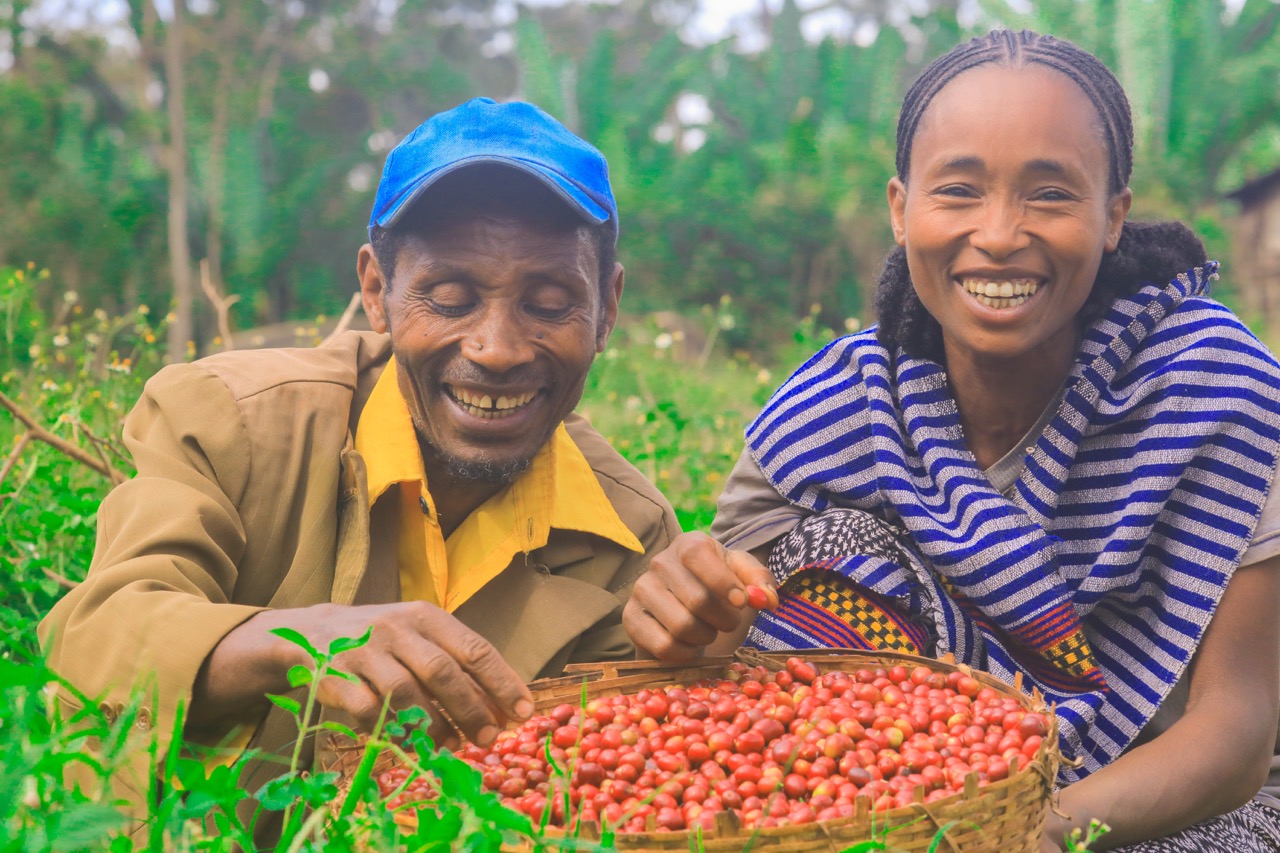
For the four origins in ORO No.01 — Brazil, Colombia, Guatemala, and Ethiopia — this means working with farms that have been visited, assessed, and contracted directly, without passing through commodity exporters who aggregate and blend away provenance. It means the farmers in the Cerrado of Brazil, the highlands of Huila, the volcanic soils of Antigua, and the forest gardens of Yirgacheffe know exactly where their coffee is going, and at what price.
"I don't think through direct trade alone you can change the balance of power. But it is a necessary condition for any serious attempt to do so."
— Sara Morrocchi, founder of Vuna Origin Consulting
The Transparency Obligation
The coffee industry has a transparency problem that marketing language has papered over for too long. Consumers who pay a premium for specialty coffee deserve to know not just that their beans came from a named farm, but what price was paid for them, what that represents relative to the cost of production, and whether the farmer's household income meets a living wage threshold.
At Espretto, we publish our farm-gate prices. We commit to a minimum of 30% above the Fairtrade floor price for all origins, and we provide multi-season purchase guarantees to every farm in our supply chain. Direct trade, done properly, is not a marketing claim. It is a financial commitment — and one that should be verifiable by anyone who asks.
The specialty coffee industry built its identity on quality and provenance. It is time to build it equally on accountability.