A skilled barista takes years to master latte art. The ability to pour steamed milk into espresso and produce a rosette, a tulip, or a swan is a genuine craft skill — one that requires an understanding of milk texture, pour speed, and the fluid dynamics of a moving surface. It is also, increasingly, something a machine can do better.
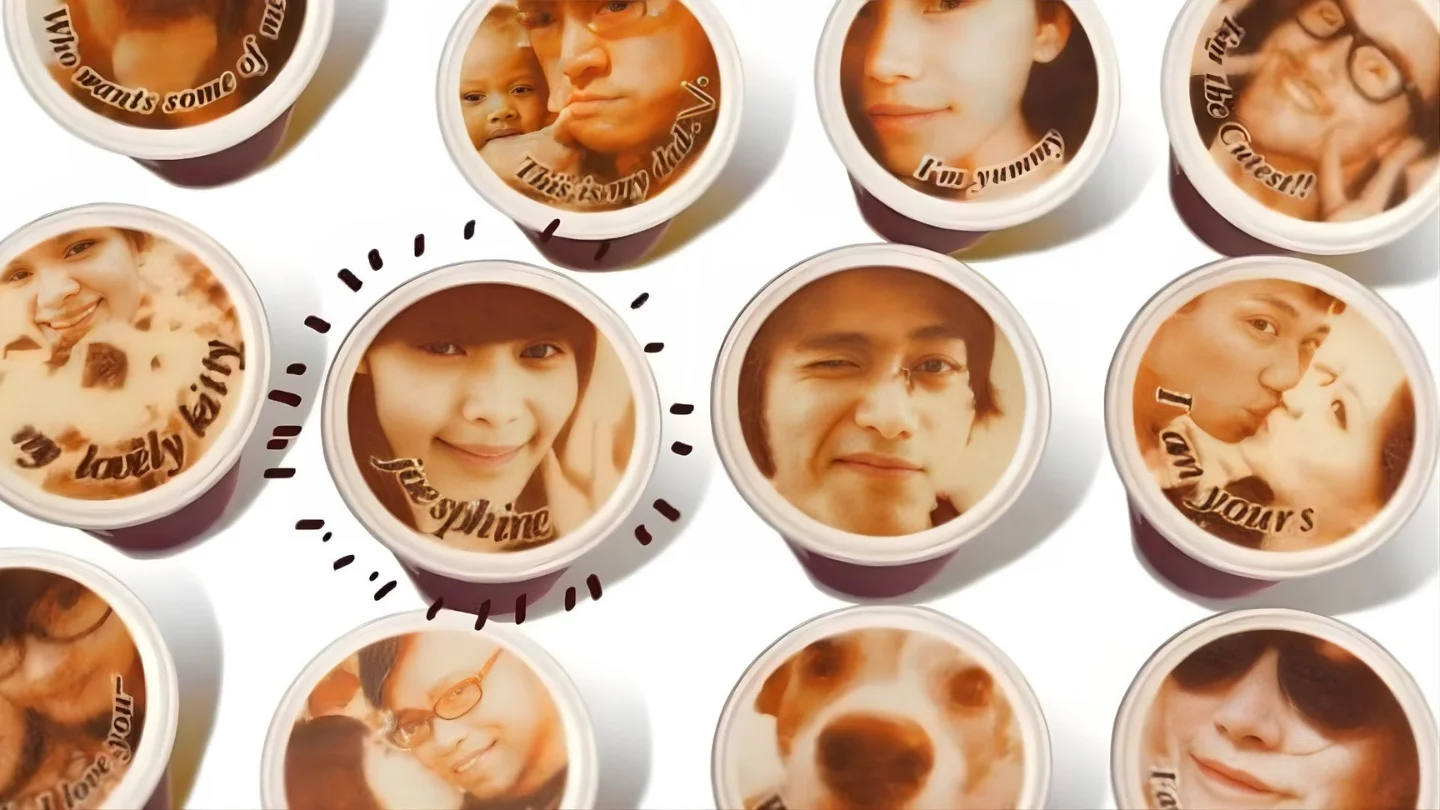
The technology behind automated latte art printing is more sophisticated than it appears. At its simplest level, a coffee printer works by dispensing a food-safe ink — typically a mixture of water and coffee concentrate — onto the surface of a prepared flat white or latte using a modified inkjet mechanism. The printer reads the surface of the drink using a computer vision system, identifies the optimal canvas area, and executes the design within 30 to 60 seconds.
"The foundation of AI latte art rests on several interconnected technologies working in harmony. Computer vision systems analyze the coffee surface, identifying the optimal canvas for design creation, while machine learning algorithms process design requests and translate them into executable instructions for robotic systems."
— Barista Life, 2025
The Fluid Dynamics Problem
The engineering challenge is not the printing itself — it is the surface. Steamed milk foam is not a stable substrate. Its viscosity, density, and surface tension vary with temperature, milk fat content, and the degree of aeration. A design that prints perfectly on a 65-degree flat white with full-fat milk may bleed or distort on a 60-degree oat milk latte. The computer vision system must assess these variables in real time and adjust the dispensing parameters accordingly.
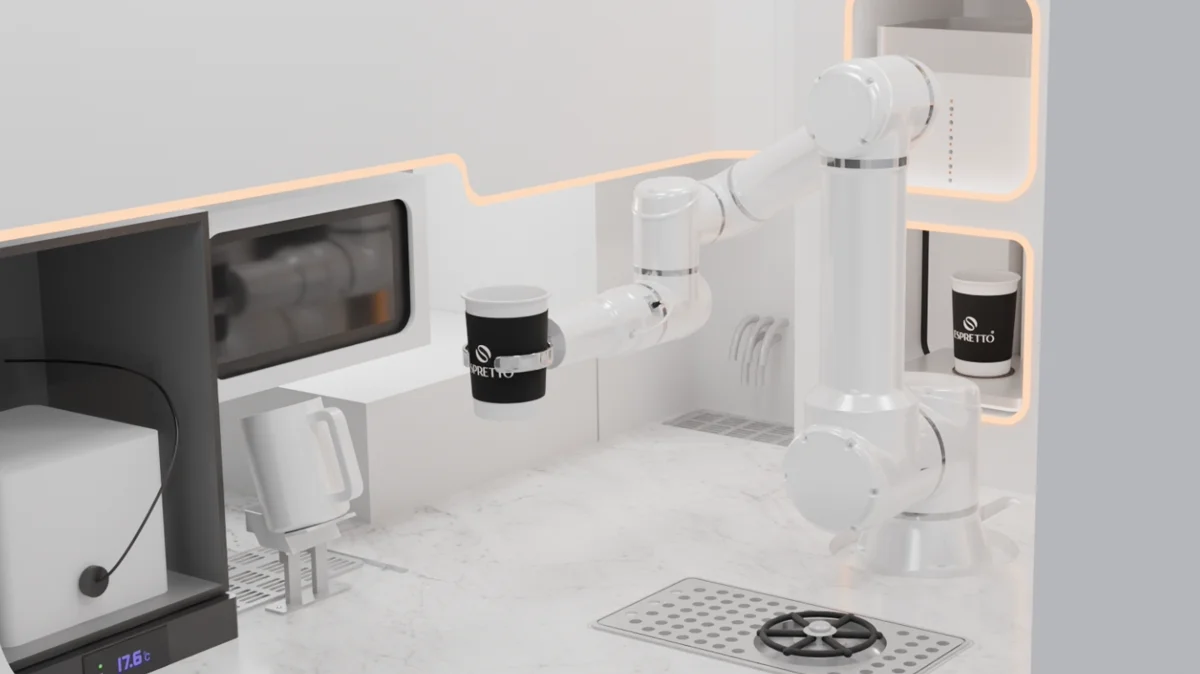
More advanced systems — including the latte art printer used in Espretto's kiosks — use laser-based surface mapping to create a three-dimensional model of the foam surface before printing begins. This allows the system to compensate for uneven surfaces, adjust ink droplet size and spacing, and predict how the design will spread as the ink contacts the foam. The result is a level of consistency and precision that, as EVEBOT notes, "can be challenging to achieve by hand."
Personalisation at Scale
The commercial case for automated latte art extends beyond novelty. Research cited by Barista Life indicates that customers are willing to pay 15 to 25% higher prices for customised experiences — including personalised latte art. In a market where differentiation is increasingly difficult and margins are under pressure, the ability to print a customer's name, a brand logo, or a bespoke design on every cup is a meaningful competitive advantage.
For Espretto, personalisation serves a specific purpose within the kiosk model. In the absence of a human barista — the traditional point of human connection in a coffee transaction — the printed design becomes the moment of personalisation. It is the system acknowledging the individual customer, in a medium that is both edible and ephemeral.
"Printed latte art offers a level of consistency and precision that can be challenging to achieve by hand. This technology allows for customization, making it easier for cafes to differentiate their offerings and engage customers with unique designs."
— EVEBOT
What the Machine Cannot Do
There is a dimension of traditional latte art that automated systems cannot replicate: the performance of it. Watching a skilled barista pour a rosette is a form of theatre — a demonstration of mastery that communicates care and attention. The printed design, however precise, lacks that narrative. It is the product of a process, not a performance.
This distinction matters less than it once did. As coffee consumption increasingly migrates to grab-and-go formats — transport hubs, office lobbies, kiosk concourses — the theatre of the pour is not part of the transaction. What matters is the quality of the cup, the speed of service, and the small moment of delight when the lid comes off and a perfectly rendered design is waiting on the surface. The machine has learned to deliver that moment. What it does with it next is up to the brand.