Every cup of ORO No.01 begins in four different places, on four different continents, at four different altitudes. The blend is the result of a deliberate decision: that no single origin, however exceptional, can deliver the full range of characteristics that a great espresso requires. Brazil provides body and sweetness. Colombia brings brightness and structure. Guatemala adds complexity and depth. Ethiopia contributes the floral, fruit-forward notes that lift the blend above the merely good.
"Terroir — encompassing climate, soil, geography, altitude, and terrain — plays a huge role in the characteristics of a coffee."
— Klatch Coffee
Brazil: The Cerrado
Brazil produces approximately 35 to 40% of the world's coffee, making it by far the largest single origin in global supply. The Cerrado region of Minas Gerais — a vast, flat savanna at elevations of 800 to 1,200 metres — produces a coffee that is, by specialty standards, almost paradoxically approachable. The flat terrain allows for mechanical harvesting, which means large volumes and consistent quality at scale. The climate — hot days, cool nights, a defined dry season — produces beans with low acidity, full body, and flavour notes of dark chocolate, caramel, and roasted nuts.
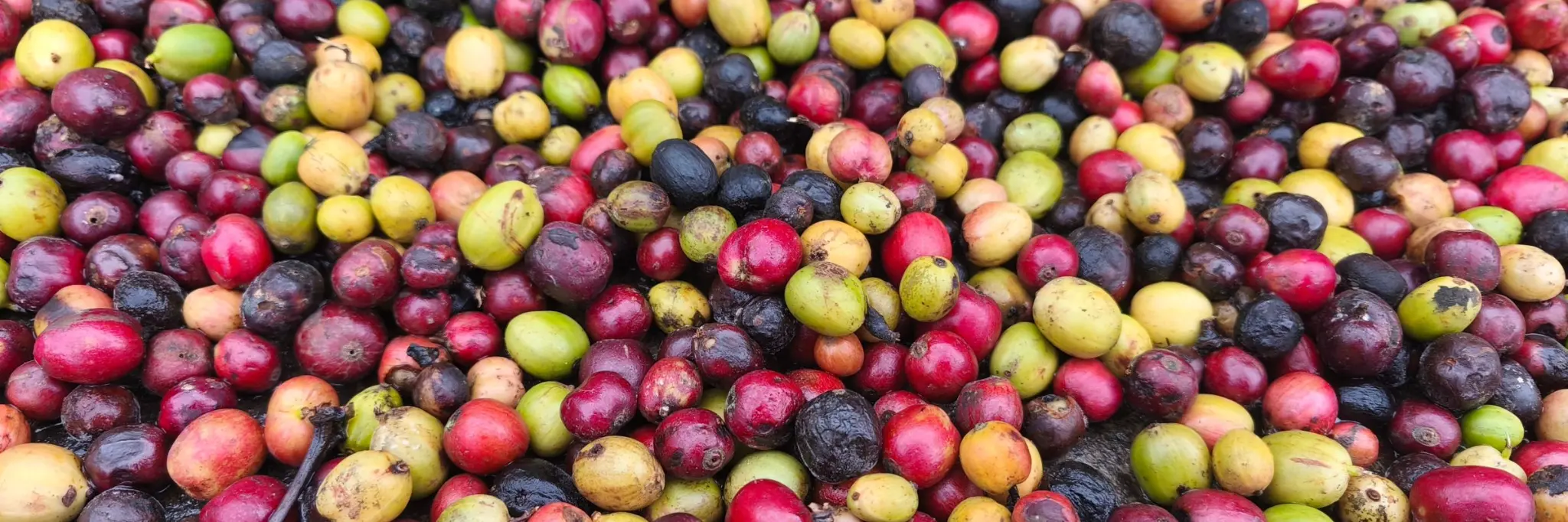
In an espresso blend, Brazilian coffee is the foundation. It provides the weight and sweetness that give the shot its body, and the low acidity that prevents the blend from becoming sharp or aggressive. Brazil's harvest runs from May to September, with the beans typically processed using the natural (dry) method — left to dry in the fruit for weeks before milling — which intensifies the sweetness and adds a subtle fermented complexity.
Colombia: The Huila Highlands
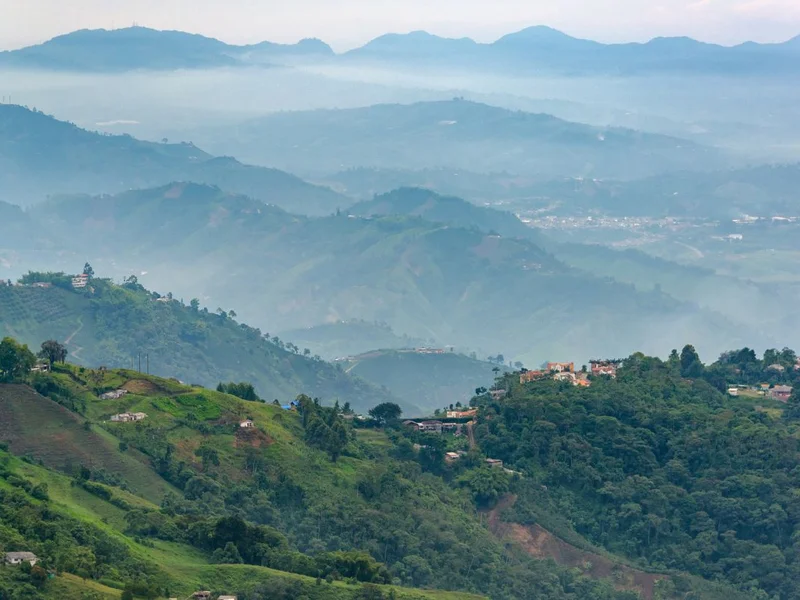
Colombian coffees are grown at elevations of between 4,200 and 6,000 feet — significantly higher than most Brazilian production — in the volcanic soils of the Andean cordillera. The Huila department, in the south of the country, is one of Colombia's most celebrated origins: a region of steep hillsides, microclimates, and smallholder farms where coffee is still picked by hand, cherry by cherry.
"Higher elevation means less oxygen and cooler temperatures, so the coffee plants grow slower. The plant then focuses more energy on bean production, which in turn produces more sugars, resulting in a flavorful cup of coffee."
— Progeny Coffee
Colombian coffee from Huila is typically washed — the fruit is removed within 24 hours of picking, and the beans are fermented and dried on raised beds. This produces a clean, bright cup with pronounced acidity, notes of red fruit and citrus, and a silky body. In the ORO blend, Colombian coffee provides the structural backbone: the brightness that makes the shot feel alive, and the clarity that allows the other origins to express themselves.
Guatemala: The Antigua Valley
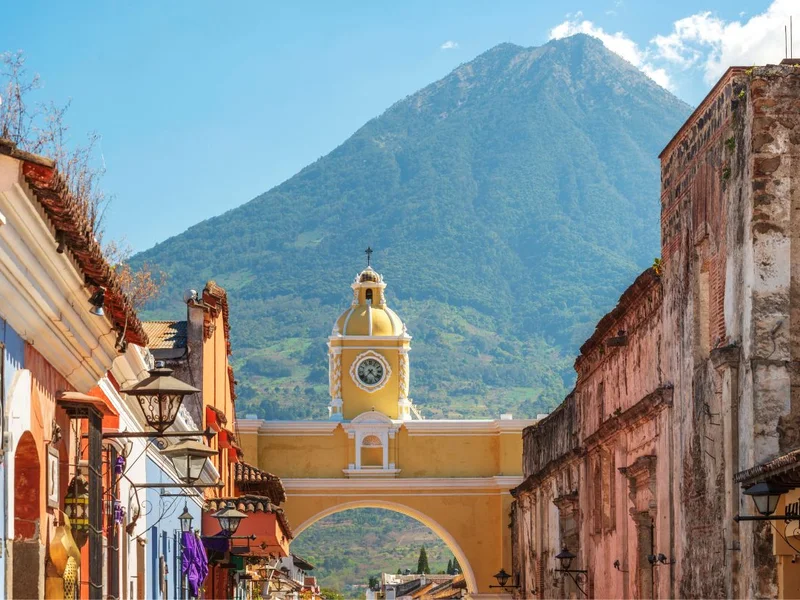
Guatemala's Antigua Valley sits at approximately 1,500 metres, surrounded by three volcanoes — Fuego, Acatenango, and Agua — whose ash-rich soils provide an exceptional growing medium. The combination of volcanic soil, high altitude, and a microclimate moderated by the surrounding mountains produces a coffee of unusual complexity: full-bodied, with a deep, wine-like acidity, notes of dark chocolate and spice, and a long, clean finish.
Guatemalan coffee is processed using a variety of methods — washed, honey, and natural — each of which produces a distinct flavour profile. The washed coffees of Antigua tend toward the classic: clean, structured, and precise. In the ORO blend, Guatemala contributes the depth and complexity that prevents the cup from being merely pleasant. It is the origin that rewards attention — the note you notice on the second sip that you missed on the first.
Ethiopia: The Forest Gardens of Yirgacheffe
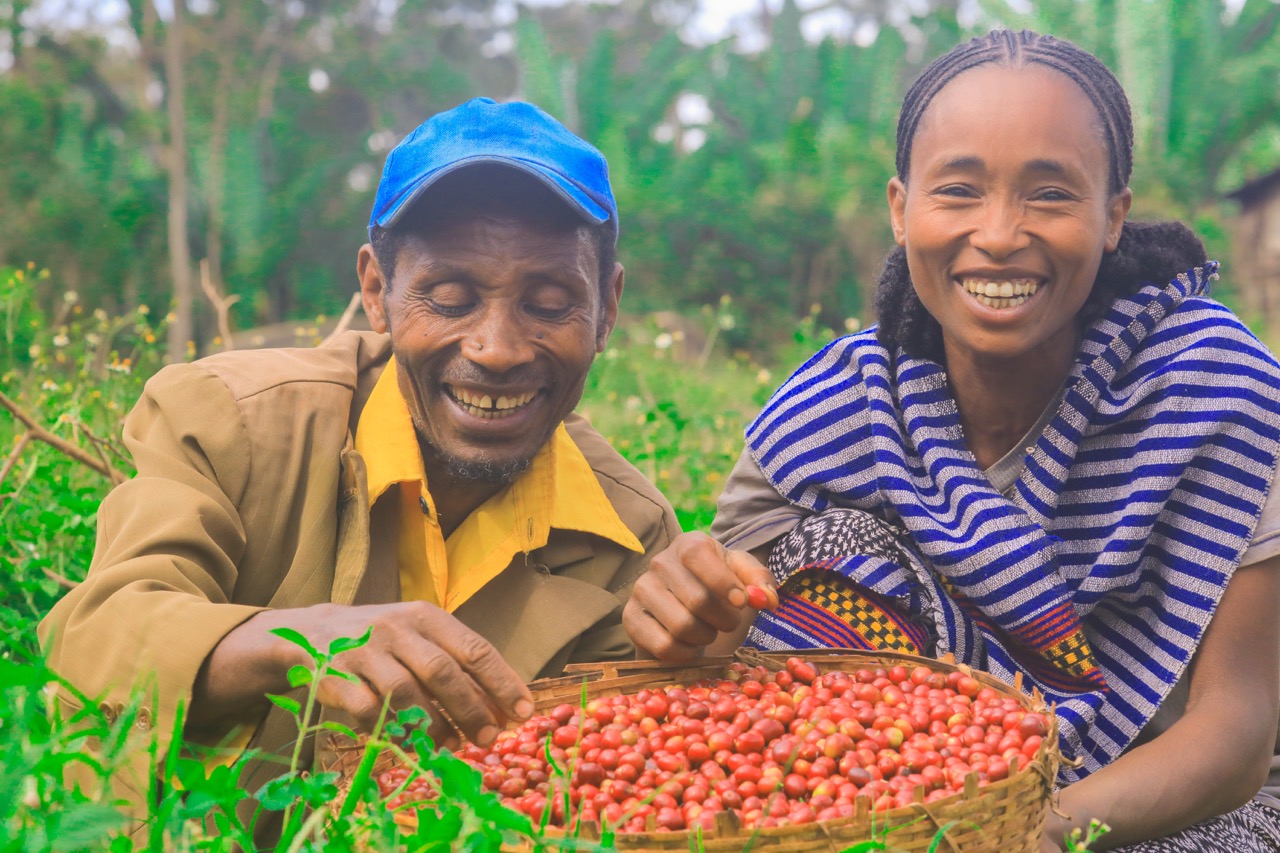
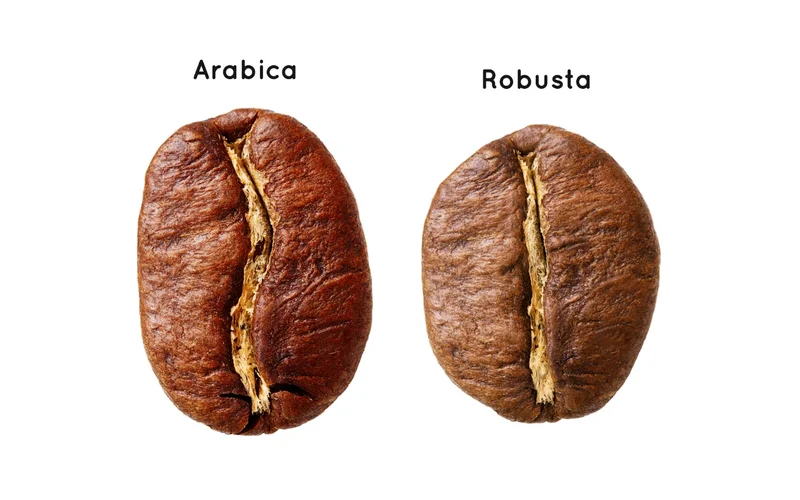
Ethiopia is the birthplace of Coffea arabica. The wild coffee forests of the southwest — from which all cultivated Arabica ultimately descends — still exist in Kaffa and Jimma, and the country's coffee culture is older and more deeply embedded than anywhere else on earth. Yirgacheffe, in the Gedeo Zone of the Southern Nations region, produces what many consider the world's most distinctive coffee: a naturally processed bean with extraordinary floral and fruit notes — jasmine, bergamot, blueberry, lemon — that seem almost impossibly complex for a single agricultural product.
"Ethiopia affords some of the highest altitude production areas for arabica coffee, allowing the fruits to mature very slowly and develop complex flavors like fruity, spicy, and floral."
— National Coffee Association
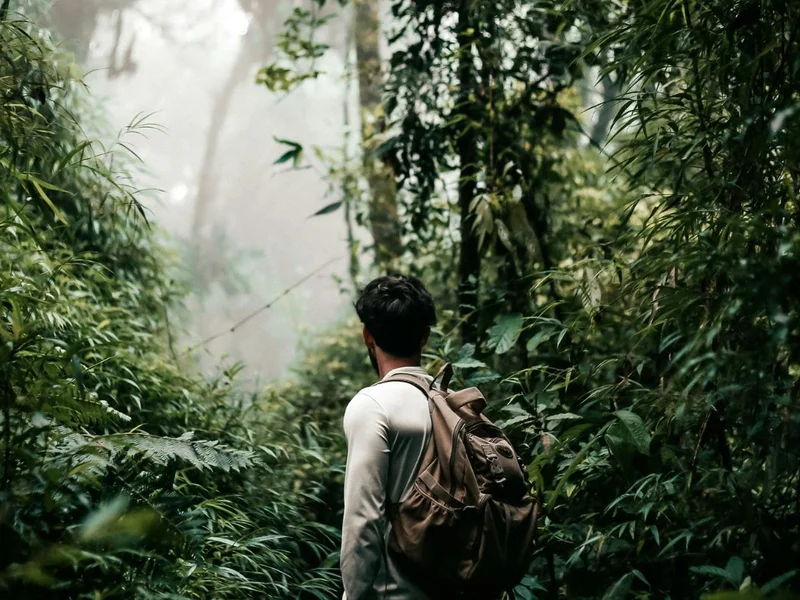
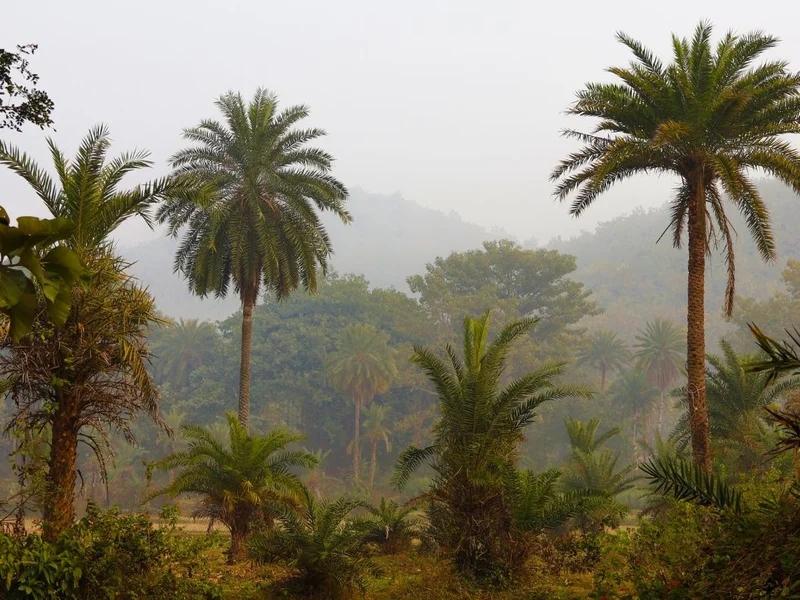
Ethiopian coffee is grown at altitudes of up to 2,200 metres, in garden plots that are often intercropped with other food plants and shaded by forest canopy. The slow maturation at high altitude, combined with the genetic diversity of Ethiopian Arabica varieties, produces a bean of exceptional aromatic complexity. In the ORO blend, Ethiopia is the top note — the element that makes the cup memorable, the floral brightness that lingers after the shot is finished.
The Blend Decision
Blending is an act of composition. Each origin contributes something that the others cannot provide, and the proportions are calibrated to produce a cup that is greater than the sum of its parts. ORO No.01 is roasted at level 6 of 10 — medium, preserving the origin characteristics of all four components while developing the body and crema that espresso demands. The result is a blend that works as a straight espresso, as a flat white, as a cortado, and as the base of a cocktail — a range of expression that a single-origin coffee, however exceptional, cannot match.
The four origins are not interchangeable. Remove the Ethiopia and the blend loses its lift. Remove the Brazil and it loses its weight. The blend is not a compromise between four coffees. It is a collaboration between four places, four climates, and four communities of farmers — each of whom has contributed something irreplaceable to what ends up in your cup.