There is a counterintuitive trend running through London's coffee scene. As the major chains continue to open large-format flagship stores, the most interesting — and often the most profitable — new coffee concepts are getting smaller. Much smaller.
The UK branded coffee shop market has achieved its fifth consecutive year of outlet growth since the pandemic, adding 420 net new outlets over the last twelve months to reach 12,313 outlets, with total market value now at £6.8 billion — a 5.5% increase year-on-year, according to the World Coffee Portal. But within that headline growth figure, the distribution of new openings tells a more nuanced story. The growth is concentrated in micro-formats: kiosks, concessions, compact units of under 30 square metres that operate with minimal staffing and maximum location flexibility.
The Economics of Small
The financial case for the micro-format is compelling. Analysis published by Hotpotato Newsletter found that micro-formats deliver three to four times the revenue per square foot of traditional café formats — up to £1,300 per square foot annually, compared to £300 to £800 for a conventional coffee shop. The reasons are structural: lower rent (smaller footprint), lower labour (fewer staff or none), lower fit-out costs, and higher throughput relative to floor area.
For a market in which 62 venues are closing every month and the sector is 14.2% smaller than it was before the pandemic, this efficiency advantage is not merely attractive — it is existential. The traditional café model, with its 25 to 40% labour cost and its dependence on high-footfall high-street locations, cannot survive the current cost environment in its existing form. The micro-format can.
"The UK coffee market is changing. The grab-and-go, cookie-cutter high street cafés that defined the past decade are losing relevance, while premium, design-led and dwell-time focused formats are growing market share."
— MCA Insight
The Commuter as Customer
The geography of the micro-format is inseparable from the geography of the post-pandemic commute. With 35% of UK workers now operating in a hybrid work model, according to Double Puc, the morning coffee occasion has shifted. It is no longer anchored to a fixed location near the office — it follows the commuter, appearing wherever the commuter happens to be: at the station, in the office lobby, in the retail concourse between the tube exit and the desk.
Grind, the London-born coffee brand, recognised this shift early. Its launch of a standalone travel café at Waterloo station — through which over 170,000 commuters pass every day — was a deliberate bet on the commuter corridor as the primary arena for premium coffee consumption. The format is compact, the service is fast, and the product is unambiguously premium. It is the opposite of the large-format café designed for dwell time.
Premium Without the Footprint
The most significant development in the micro-format trend is the decoupling of premium quality from large physical space. For most of the history of specialty coffee, the quality of the experience was tied to the quality of the environment: the carefully designed interior, the knowledgeable staff, the curated music, the single-origin filter menu. These things required space, and space required rent.
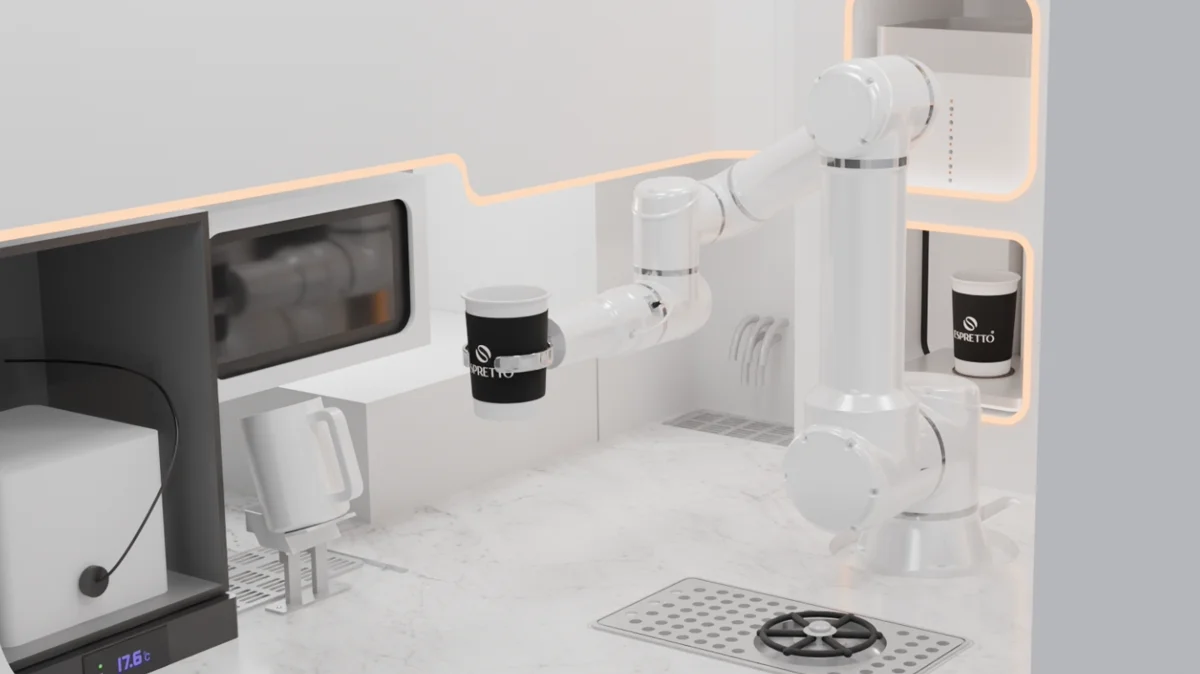
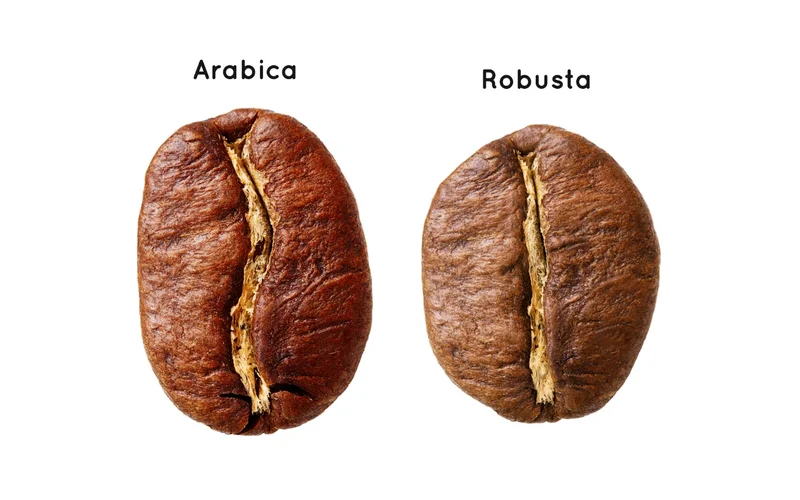
Automation has broken this link. A robotic kiosk can deliver a 100% Arabica espresso, extracted at precise temperature and pressure, with a personalised latte art design, in under 60 seconds, from a footprint of under four square metres. The quality is not compromised by the format — in some respects, as the consistency data suggests, it is enhanced by it.
This is the logic behind Espretto's kiosk model. The premium experience — the sourcing, the roasting, the extraction precision, the personalisation — is delivered through a format that is smaller, faster, and more location-flexible than any traditional café. The size is not a limitation. It is the point.
What Survives at Scale
The coffee formats that will define the next decade are not the ones that are trying to replicate the traditional café in a smaller space. They are the ones that have accepted that the traditional café model is structurally compromised and built something new in its place. The micro-format is not a diminished version of the café. It is a different product entirely — one optimised for the way that urban consumers actually consume coffee in 2026: on the move, in transit, between one thing and the next.
The best coffee shops in London are getting smaller because the city itself has changed. The commute is different, the office is different, the high street is different. The coffee shop that survives will be the one that goes where the customer is, rather than waiting for the customer to come to it.