There is no single best way to brew coffee. There is only the best way to brew the coffee you have, for the cup you want, with the equipment in front of you. The question of method is inseparable from the question of intention — and the answer changes depending on whether you are making a single precise shot at six in the morning or a generous pot for four people on a Sunday.
What follows is an honest assessment of five methods that between them cover almost every scenario. Each has a distinct philosophy, a distinct flavour profile, and a distinct set of trade-offs. Understanding those trade-offs is the difference between a good cup and a great one.
Espresso
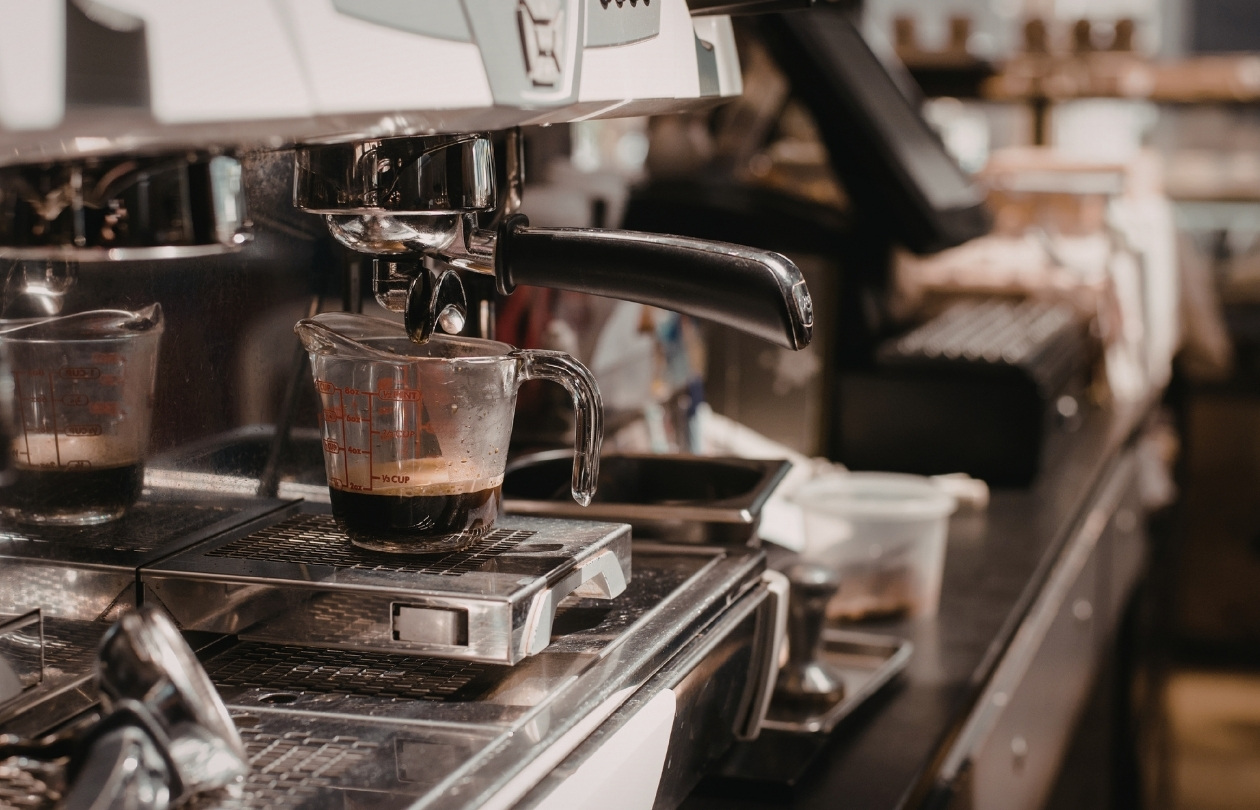
Espresso is not a roast level or a bean variety. It is a brewing method: hot water forced through finely ground, compacted coffee at approximately nine bars of pressure, producing a concentrated 25–30ml shot in 25–30 seconds. The result is a drink with a flavour intensity that no other method can replicate — a combination of dissolved solids, emulsified oils, and suspended fine particles that gives espresso its characteristic body, crema, and lingering finish.
The variables are exacting. Grind size, dose, tamp pressure, water temperature (ideally 92–96°C), and extraction time all interact. A change of half a gram in dose or a single second in extraction time produces a measurably different cup. This precision is what makes espresso both the most demanding and the most rewarding of all brew methods. It is also what makes it the foundation of every milk-based drink — the flat white, the cappuccino, the latte — because only espresso has the structural intensity to hold its character through dilution and texture.
The espresso machine does not simplify coffee. It concentrates it — in every sense of the word.
For ORO No.01, espresso is the intended format. The blend was calibrated at roast level 6/10 specifically to produce a shot with caramel body from the Brazilian Sul de Minas component, stone fruit brightness from the Colombian Huila, structural depth from the Guatemalan Antigua, and floral top notes from the Ethiopian Yirgacheffe. Each origin contributes something the others cannot, and espresso is the method that brings all four into simultaneous expression.
AeroPress
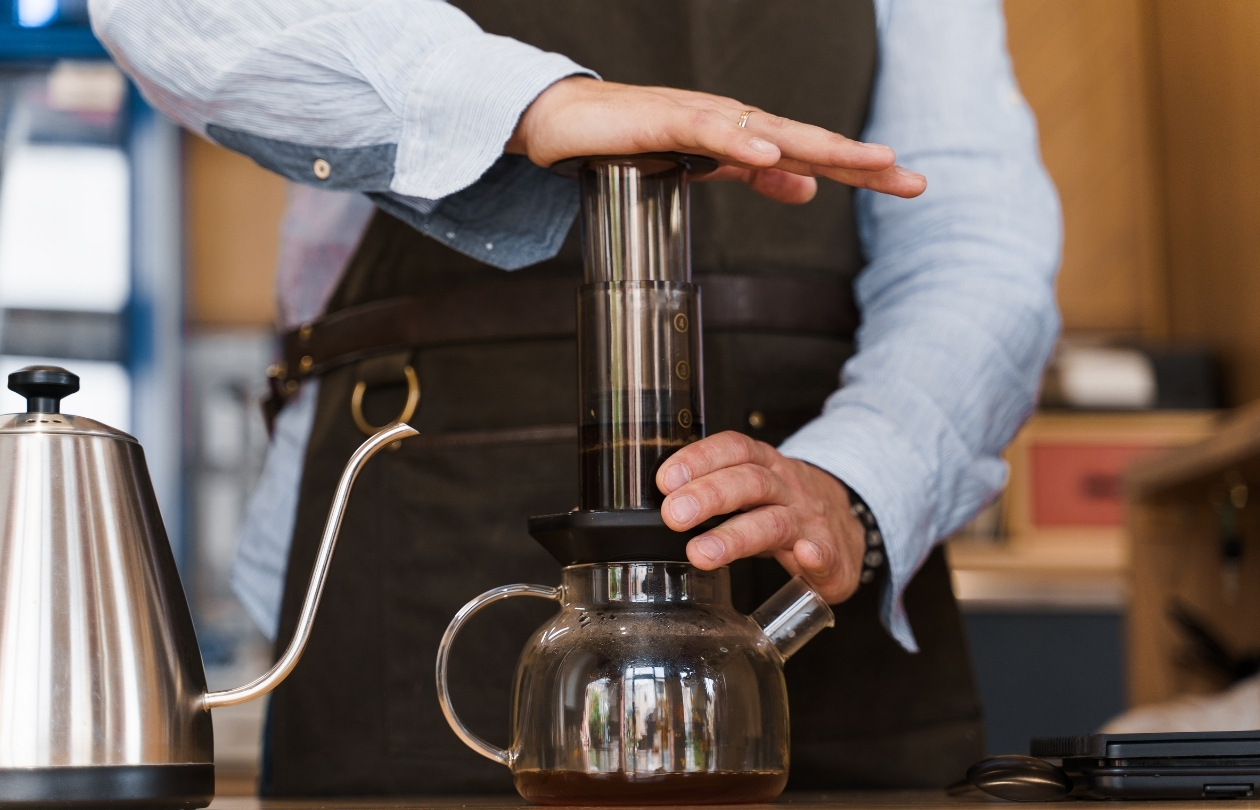
The AeroPress was invented in 2005 by Alan Adler, a Stanford engineering lecturer, and it remains one of the most versatile and forgiving brew devices ever made. It uses a combination of immersion and pressure — ground coffee steeps in hot water before being pressed through a paper or metal filter — producing a clean, full-bodied cup that sits somewhere between espresso and filter coffee in character.
The AeroPress rewards experimentation. Water temperature can range from 75°C to 96°C, steep time from 30 seconds to 3 minutes, and the device can be inverted to extend immersion. The World AeroPress Championship, held annually since 2008, has produced hundreds of distinct winning recipes — evidence of how much variation the method accommodates. For a medium roast like ORO No.01, a water temperature of 85–88°C with a two-minute steep and a slow 30-second press produces a cup that highlights the fruit notes without over-extracting the roast character.
The AeroPress is also the most practical of all manual methods. It is lightweight, virtually unbreakable, and produces a single cup in under three minutes with minimal cleanup. For anyone who travels with good coffee, it is the only device worth carrying.
Pour-Over
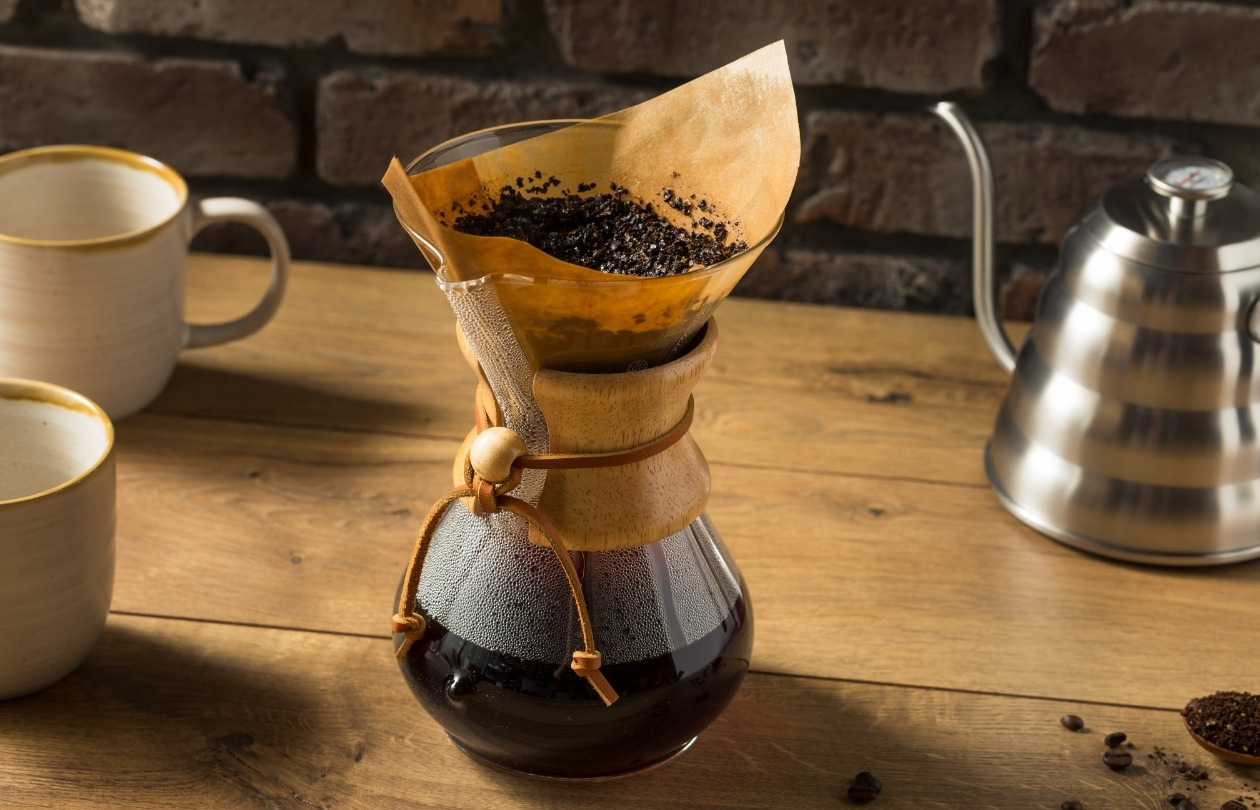
Pour-over brewing — whether through a Hario V60, a Chemex, or a Kalita Wave — is the method that most clearly rewards the quality of the coffee itself. Water passes through a bed of ground coffee by gravity alone, with no pressure and no immersion. The result is a clean, transparent cup in which every characteristic of the bean is expressed without interference.
The technique matters enormously. A 30–45 second bloom pour (approximately twice the weight of the coffee in water) allows CO2 to degas from freshly roasted beans, ensuring even extraction in the subsequent pours. Total brew time for a single cup (15g coffee, 250ml water) should fall between 2.5 and 3.5 minutes; outside that window, the cup will be either under-extracted and thin or over-extracted and bitter.
Pour-over is the method of choice for single-origin coffees where the goal is transparency — where you want to taste the specific farm, the specific processing method, the specific harvest. For a blend like ORO No.01, it produces a lighter, more delicate expression than espresso: the Ethiopian floral notes become more prominent, the Brazilian caramel recedes, and the Colombian fruit sits in the foreground. It is a different coffee from the same bag — not better or worse, but genuinely different.
French Press
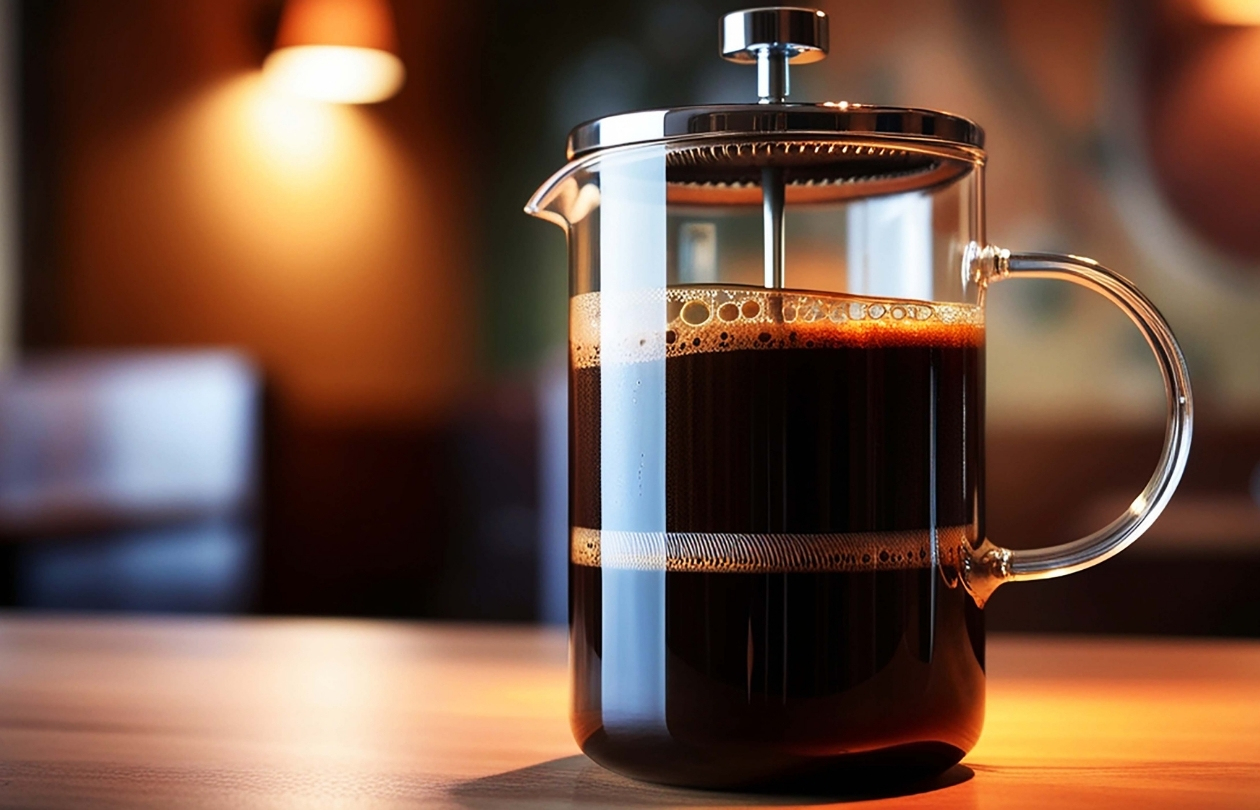
The French press is the oldest and simplest of the immersion methods. Coarsely ground coffee steeps in hot water for four minutes before a metal mesh plunger is pressed to separate grounds from liquid. There is no paper filter, which means the oils and fine particles that other methods remove remain in the cup — giving French press coffee its characteristic full body, low acidity, and slightly textured mouthfeel.
The trade-off is clarity. French press coffee is inherently less clean than pour-over or AeroPress, and the fine particles that pass through the mesh continue to extract in the cup, meaning the last third of a French press pot is often more bitter than the first. The solution is to decant immediately after pressing and to use water at 93–95°C rather than boiling, which reduces the risk of over-extraction in the initial steep.
French press suits darker roasts and blends designed for milk. For ORO No.01 at roast level 6, it produces a generous, warming cup that emphasises the body and sweetness of the Brazilian component — well suited to a long, unhurried morning rather than the precision of an espresso service.
Moka Pot
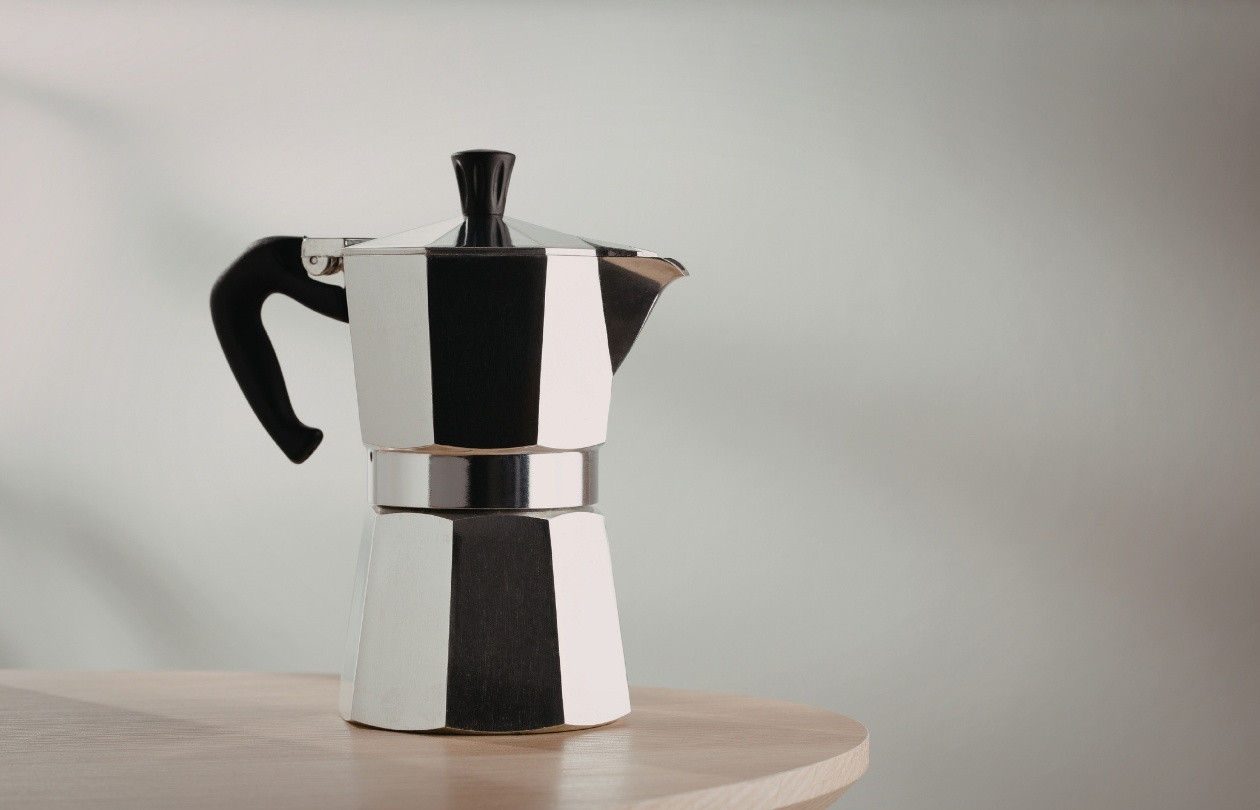
The moka pot — invented by Alfonso Bialetti in 1933 and still manufactured in the same form today — brews coffee by passing steam pressure through a bed of ground coffee as water in the lower chamber heats on a stovetop. The result is a concentrated, intensely flavoured brew that is often described as stovetop espresso, though the pressure involved (1–2 bars, compared to 9 bars in a machine) produces a fundamentally different extraction.
Moka pot coffee is darker, more bitter, and more aromatic than machine espresso, with less crema and a denser, less emulsified body. It is also more forgiving of grind inconsistency and less sensitive to dose variation — qualities that made it the dominant home brewing method across Southern Europe for most of the twentieth century.
The key to a good moka pot is heat management. Starting with pre-boiled water in the lower chamber reduces the time the grounds spend in contact with heat before extraction begins, preventing the scorched, metallic notes that characterise poorly made moka coffee. A medium-low flame and removal from heat the moment the upper chamber begins to fill completes the picture.
Choosing Your Method
The choice of brew method is ultimately a choice about what you value in a cup. Espresso rewards precision and produces intensity. AeroPress rewards curiosity and produces versatility. Pour-over rewards patience and produces clarity. French press rewards simplicity and produces body. Moka pot rewards tradition and produces character.
None of these is the correct answer. All of them, with good coffee and appropriate technique, produce something worth drinking. The only wrong choice is to use a method you do not understand for a coffee you have not tasted — and to blame the coffee when the cup disappoints.
ORO No.01 was designed for espresso. But it performs well across all five methods, because a blend built on four high-quality origins has the structural complexity to survive different extraction approaches and still produce something worth drinking. The espresso shot is the intended expression. Everything else is a different conversation with the same coffee.